Here is the quick answer
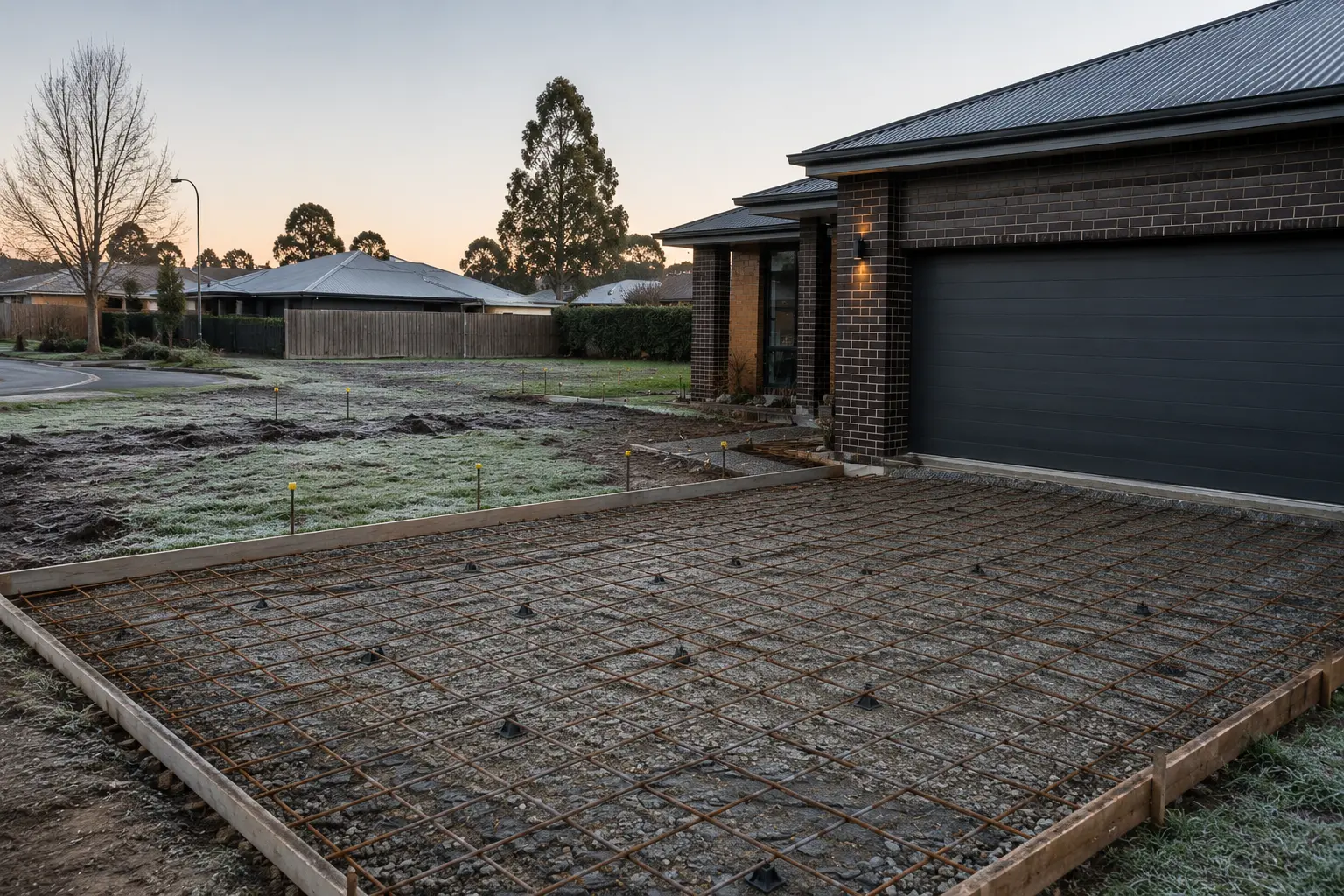
Yes, you can pour concrete in winter in Victoria. Cold weather does not automatically stop a concrete pour, but lower temperatures slow setting and early strength development. Once conditions get down around 5°C or below, frost, ground temperature and the overnight forecast become much more important.
At All Set Concreting, we assess the actual site and forecast before deciding whether to proceed. If freezing conditions create too much risk, we may recommend delaying the pour. ACI cold-weather concrete guidance confirms that concrete can still achieve the required strength and durability in cold weather when it is properly produced, placed and protected.
Here is the detailed answer
Winter concreting is less about asking, “Can we pour today?” and more about asking, “Can we pour today and give this concrete the conditions it needs afterwards?”
The temperature when the concrete truck arrives is only one part of the picture. We also consider:
- How cold the prepared ground and base are
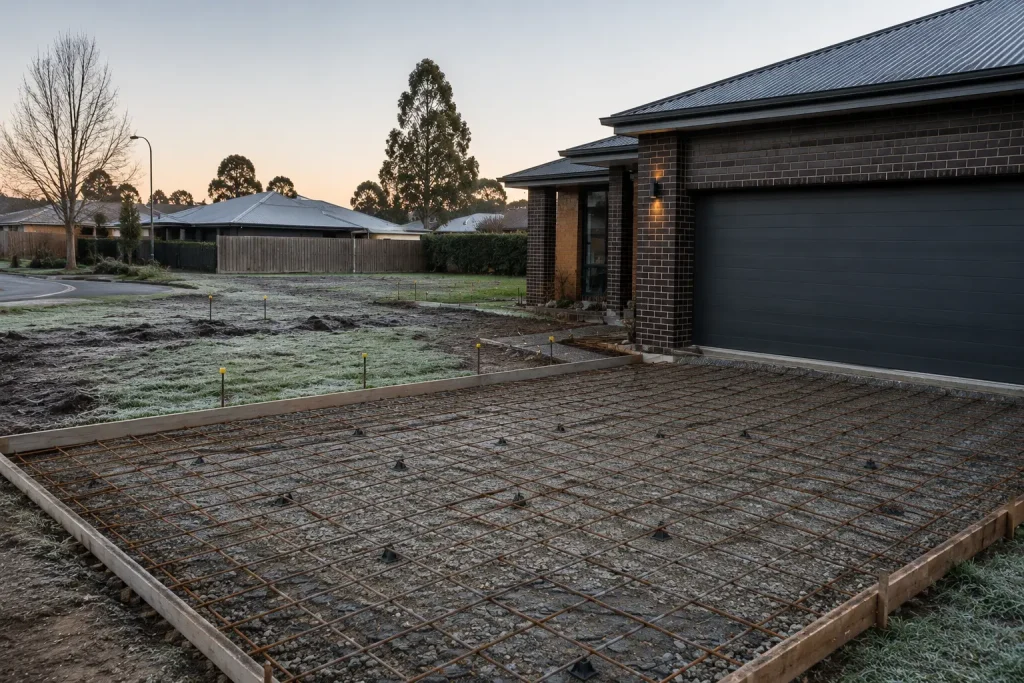
- Whether frost has affected the site
- The temperature while the concrete is being placed and finished
- How quickly temperatures are expected to fall
- The overnight minimum
- Wind and rain
- The type and size of the concrete project
- How the new concrete will be cured and protected
The American Concrete Institute describes cold weather as conditions where the air temperature has fallen to, or is expected to fall below, 5°C during the protection period. The colder conditions become, the more important appropriate protection is. Read the ACI cold-weather concrete overview.
That does not mean 5°C is a magic cut-off where concrete suddenly cannot be poured. It means the conditions need to be assessed more carefully.
Does Where You Are in Victoria Make a Difference?
Yes. Winter conditions can vary across the areas we service, and we do not use a blanket rule for every suburb or town. We check the actual forecast and site conditions for each job.
| Area | What We Pay Particular Attention To in Winter |
| Ballarat | Frost, low overnight temperatures and ground conditions |
| Bacchus Marsh | Overnight temperatures, rain and base conditions |
| Melbourne | Temperature, rain, wind and how conditions are expected to change through the day |
| Caroline Springs | Overnight temperatures, wind, rain and site exposure |
| Melton | Overnight temperatures, base conditions and changing weather |
| Gisborne | Overnight lows, frost risk and site conditions |
| Macedon Ranges | Overnight lows, frost risk and exposed sites |
| Sunbury | Overnight temperatures, frost risk and wind exposure |
| Ballan | Cold mornings, overnight lows and ground conditions |
| Buninyong | Frost risk, overnight temperatures and site exposure |
| Woodlea | Temperature, wind, rain and curing conditions |
| Eynesbury | Temperature, wind exposure and overnight conditions |
The important point: we do not make a pouring decision based purely on the postcode. We look at what is happening on the actual site.
Can You Pour Concrete in Ballarat in Winter?
Yes, but Ballarat is one of the locations where the winter forecast deserves particular attention.
Bureau of Meteorology records for Ballarat Aerodrome show a long-term July mean maximum of 10.1°C and mean minimum of 3.2°C. The same climate record shows an average of 4.3 July days at or below 0°C. See the Ballarat Aerodrome climate statistics.
That does not mean concreting stops for winter. It means we need to plan around the actual conditions. Our Ballarat concreting services cover driveways, slabs, crossovers, retaining walls and outdoor concrete areas across Ballarat and regional Victoria.
If we are looking at a winter pour in Ballarat, the conditions after the concrete is placed can be just as important as the temperature during the pour. A mild afternoon followed by a freezing night is a different situation from the same afternoon followed by a much warmer overnight minimum.
How Cold Is Too Cold to Pour Concrete?
There is not one temperature where concrete instantly becomes impossible to pour. As a practical guide, colder conditions mean more attention needs to be paid to placement, curing and protection.
| Temperature / Conditions | What It Means for Planning |
| Above 10°C | Often relatively straightforward, subject to the normal site and weather checks |
| 5°C to 10°C | Setting and early strength development can be slower |
| Around 5°C or below | Cold-weather planning and protection become more important |
| Freezing conditions expected | The risk needs to be assessed carefully, including whether suitable protection is practical or whether the pour should be postponed |
ACI guidance states that concrete placed during cold weather can still achieve its intended strength and durability when it is properly produced, placed and protected. ACI resources on cold-weather concrete.
So when someone asks us, “At what temperature is too cold to pour concrete?”, we do not give a single number without considering the rest of the job. The temperature alone does not tell us what the ground is like, whether frost is expected, how exposed the site is or what will happen overnight.
Can You Pour Concrete if It Freezes at Night?
A forecast overnight freeze is something that needs to be taken seriously because fresh concrete is vulnerable before it develops enough early strength.
Before proceeding with a pour where very cold overnight temperatures are expected, we consider:
- The expected overnight minimum
- When the temperature is forecast to fall
- How long the concrete will have been in place
- The concrete mix and type of project
- Slab thickness
- Ground conditions
- Exposure to wind
- The protection available
- The following day’s forecast
If the conditions create an unnecessary risk and suitable protection is not practical, rescheduling can be the better decision.
What Happens if Fresh Concrete Freezes?
Freezing freshly mixed concrete too early can cause permanent damage. The water in fresh concrete is part of the hydration process that allows cement to develop strength. If the concrete freezes before enough early strength develops, its internal structure can be harmed.
Early freezing can contribute to:
- Reduced strength
- Internal damage
- Reduced durability
- Surface deterioration
- Problems with the finished result
ACI guidance on the effect of freezing on concrete states that freshly mixed concrete should be protected from a single freezing cycle until it has developed a compressive strength of approximately 3.5 MPa (500 psi).
For a homeowner, the practical takeaway is simple: fresh concrete should not be allowed to freeze before it has developed sufficient early strength.
Is Concrete Ruined if It Freezes?
It depends on when the freezing occurs and how much strength the concrete has already developed. Freezing very early can permanently damage fresh concrete. Once sufficient early strength has developed, the concrete is much more resistant to a single freezing event.
That is why the early period after placement matters so much. When we assess a winter pour, we are thinking beyond placement and finishing to the conditions the concrete will experience afterwards.
How Long Does Concrete Have to Be Protected From Freezing?
There is not one universal number that applies to every driveway, slab or concrete mix. The protection period depends on the concrete and the conditions.
- Concrete mix and specified strength
- Concrete temperature
- Air temperature
- Wind and exposure
- Slab thickness
- Type of construction
- How quickly strength is developing
- Curing and protection conditions
The aim is to protect the concrete during the period when early freezing could damage it, rather than assuming every job needs exactly the same number of hours or days.
What Are the Risks of Pouring Concrete in the Cold?
Cold weather does not automatically mean bad concrete, but it does add variables that need to be managed.
- Slower setting: Concrete can take longer to reach the stage where finishing can be completed.
- Slower early strength development: The concrete may require more time before it can safely take normal loads.
- Early freezing: Fresh concrete can be damaged if it freezes before sufficient strength develops.
- Cold ground conditions: The condition of the base underneath the concrete also matters.
- Frost: Very cold overnight conditions can create additional risk during the early curing period.
- Finishing delays: A winter pour can behave differently from the same mix on a mild day.
- Changing weather: Conditions can move quickly during a Victorian winter.
- Rain and wind: Temperature is not the only environmental factor that affects a pour.
The answer is not to avoid winter. It is to plan around the conditions.
What Should Be Considered Before a Winter Concrete Pour?
Cold-weather concreting requires more attention to the conditions before, during and after the pour. The exact requirements vary between projects, but the main factors to consider include:
1. Check the Forecast
Look beyond the temperature at the scheduled start time. Morning temperatures, the expected daytime maximum, wind, rain, frost risk, the overnight minimum and the following day’s forecast all help determine whether conditions are suitable.
2. Check the Prepared Site
The condition of the prepared base and ground also matters. Fresh concrete should not be placed onto frozen or otherwise unsuitable ground, and site conditions need to be appropriate for the individual project.
3. Consider the Pour Time
Where practical, pour timing should take the forecast into account. The temperature during placement is important, but so are the conditions the fresh concrete will experience as temperatures change later in the day and overnight.
4. Consider the Type of Project
A driveway, footpath, shed slab, crossover, patio or larger commercial slab can have different requirements. Size, thickness, exposure, finish and intended use can all affect how a cold-weather pour needs to be planned.
5. Allow for Slower Setting and Strength Development
Cold weather can slow concrete setting and early strength development. Finishing needs to respond to the concrete and actual conditions rather than assuming it will behave the same way as it would on a warmer day.
6. Consider Curing and Protection
The appropriate curing and protection approach depends on the concrete, the project and the forecast. In cold conditions, particular attention needs to be given to protecting fresh concrete from freezing while it develops sufficient early strength.
7. Decide Whether the Conditions Are Suitable
Winter itself is not a reason to cancel a concrete pour. However, if the site or forecast creates a risk that cannot be managed appropriately, postponing the pour may be the better option.
What Are Our Tips for Pouring Concrete in Cold Weather?
For us, winter concreting is mostly about preparation, timing and monitoring the conditions.
- Check the full forecast rather than only the temperature at pour time
- Pay particular attention to the overnight minimum
- Make sure the prepared base and ground conditions are suitable
- Do not pour onto frozen or otherwise unsuitable ground
- Allow for slower setting and early strength development
- Consider wind as well as air temperature
- Plan the pour timing around the forecast where practical
- Use an appropriate curing and protection approach for the project
- Do not rush the finishing process
- Keep monitoring conditions after the concrete has been placed
- Postpone the pour if the conditions cannot be managed appropriately
At What Temperature Does Concrete Crack?
There is not one air temperature at which concrete suddenly cracks. Cracking can happen for several reasons, and freezing damage to fresh concrete is only one of them.
- Drying shrinkage
- Ground movement
- Poor base preparation
- Joint design or placement
- Temperature-related expansion and contraction
- Drainage problems
- Loads on the finished concrete
- Early-age freezing damage
Fresh concrete freezing during early strength development is different from an established driveway developing cracking later in its service life. Proper preparation, appropriate concrete specification, reinforcement where required, joints, drainage and curing all play a role in performance.
What Is the 90-Minute Rule for Concrete?
You may come across the “90-minute rule” while researching concrete online, but it is important to understand the context.
The rule comes from the American ASTM C94/C94M specification for ready-mixed concrete. Older editions included a requirement to complete discharge within 90 minutes of batching. According to an ACI Concrete Q&A published in 2024, the fixed 90-minute requirement was replaced from the 2021 edition with provision for a time limit to be agreed between the purchaser and concrete producer.
It should not be treated as a universal Australian rule that every load automatically becomes unusable at exactly 90 minutes, and it is not a rule about how long concrete takes to cure. The project specification, supplier requirements, concrete mix and site conditions still matter.
Does It Cost More to Pour Concrete in Winter?
Not automatically. We do not suggest a generic winter surcharge because the cost depends on what the individual project requires.
Cold-weather conditions can affect the cost of a project if they require additional measures such as:
- Additional labour
- Extra protection
- More preparation
- Different scheduling
- Additional curing measures
- A return visit or rescheduled pour
The bigger pricing factors on most concrete jobs are still the area, finish, excavation, site access, base preparation, reinforcement, concrete thickness, drainage and any pumping or crossover requirements.
If you are budgeting for a driveway, our concrete driveway cost guide for Victoria explains the main pricing factors and typical cost considerations in more detail.
Are There Benefits to Pouring Concrete in Cooler Weather?
There can be, but it is important to distinguish between moderately cool weather and freezing conditions.
Very hot weather creates its own concrete challenges. ACI hot-weather concrete guidance notes that high temperatures, low humidity and wind can increase moisture loss and rapid hardening, which can affect placement and cracking potential.
Moderately cool conditions can therefore avoid some of the rapid-setting and evaporation pressures associated with very hot weather. But colder is not automatically better. Once frost or freezing becomes a risk, a different set of precautions is required.
What Time of Year Is Best to Pour a Concrete Slab in Victoria?
There is not one perfect season. Every season creates different conditions to manage.
| Season | What We Consider |
| Summer | Heat, faster setting, moisture loss, wind and hot surfaces |
| Autumn | Often moderate, although conditions still vary |
| Winter | Slower setting, cold mornings, frost risk and low overnight temperatures |
| Spring | Often suitable, but rain, wind and sudden weather changes still need to be considered |
A suitable winter day can be a better pouring day than an extremely hot, dry and windy summer afternoon. We assess the actual forecast and site conditions rather than choosing a date based on the season alone.
When Should You Not Pour Concrete?
There are situations where postponing a pour may be the safer option. These can include:
- Frozen or otherwise unsuitable ground
- Significant frost or freezing conditions expected shortly after placement
- Temperatures likely to fall too low before the concrete develops adequate early strength
- Heavy rain likely to affect placement or finishing
- A waterlogged or unstable prepared base
- Unsafe site access
- Conditions where the concrete cannot be adequately protected
- Other site issues that need to be corrected before pouring
The goal is not to pour simply because the truck was booked. The goal is a finished concrete project that performs as intended.
Will Concrete Go Back Down After Winter?
If an existing driveway, path or slab appears to lift or move during winter, that is a different issue from pouring fresh concrete. Movement can be related to the ground underneath the slab, moisture, drainage, tree roots or other site conditions.
We would not assume that existing concrete will simply settle back into place when winter ends. If a slab is moving, lifting or cracking, the cause should be assessed before deciding on a repair.
So, Can You Pour Concrete in Winter in Victoria?
Yes. Concrete can be poured successfully during winter, provided the project is planned for the conditions and fresh concrete is properly placed, cured and protected.
The key considerations include:
- The prepared site and base
- Daytime temperatures
- Overnight temperatures
- Frost and freezing risk
- Wind and rain
- The concrete mix and type of project
- How the fresh concrete will be cured and protected
This is particularly relevant in Ballarat, where long-term Bureau of Meteorology data confirms that sub-zero winter mornings are a normal part of the climate.
Planning a Concrete Project This Winter?
If you are planning a driveway, slab, crossover, patio, pathway or another concrete project this winter, get in touch with All Set Concreting.
We provide residential and commercial concreting across Bacchus Marsh, Ballarat, Melbourne and regional Victoria. All Set Concreting promotes 22+ years of industry experience, $20 million public liability cover and work completed to relevant Australian Standards on its Ballarat service page.
You can learn more about our concreting in Ballarat, concrete driveways in Ballarat, concrete slabs for sheds and driveway crossover services.
We will look at the project, the site and the expected conditions and work out the most suitable way to approach the pour.
Call All Set Concreting on 0427 834 948 or request an obligation-free quote for your concreting project.